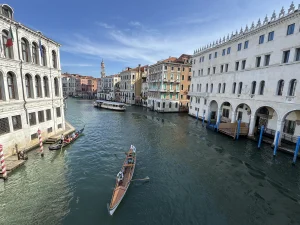
I feel at home in harbour cities. I was born in a city whose name literally means “all port.” So, it’s no surprise that the moment I stepped off the train at Venice ’s Santa Lucia station, the scent of salty seaweed filled my nose and I immediately felt I belonged.
Venice is deeply maritime, yet it is also profoundly a city born from the timeless human need to come together to survive.
Origins of Venice: Refugees and Fishermen
In the 5th and 6th centuries AD, so-called barbarians arrived, and a handful of fishermen and refugees, fleeing raids by Huns and Lombards on the mainland, settled on the lagoon’s tiny islands.
Since then, Venetians have been problem-solvers by necessity. Day after day, generation after generation, they’ve faced challenges that continue to shape the city even today.
Engineering a City on Water
How do you build a city in a tiny, muddy space where everything sinks? Venetians invented an underwater forest. Beneath churches, palaces, and streets lie hundreds of millions of wooden piles – arch, oak, elm – soaked in oxygen-free, muddy water. Despite what you might think, these piles don’t rot; they harden over time as minerals seep into the wood. On top, beams are laid and then a foundation of dense, saltwater-resistant Istrian stone, upon which the buildings rise.
How do you secure fresh water when the lagoon is brackish? By building cisterns inside homes to collect rainwater via gutters. They line these cisterns with waterproof mortar to keep the water clean, and some noble houses even had multiple cisterns with sand and stone filters.
How do you become self-sufficient, in terms of food supply? By reclaiming every inch of the surrounding islands for gardens, vineyards, and pastures.
Modern Life in Venice: Ancient Traditions Meet Today
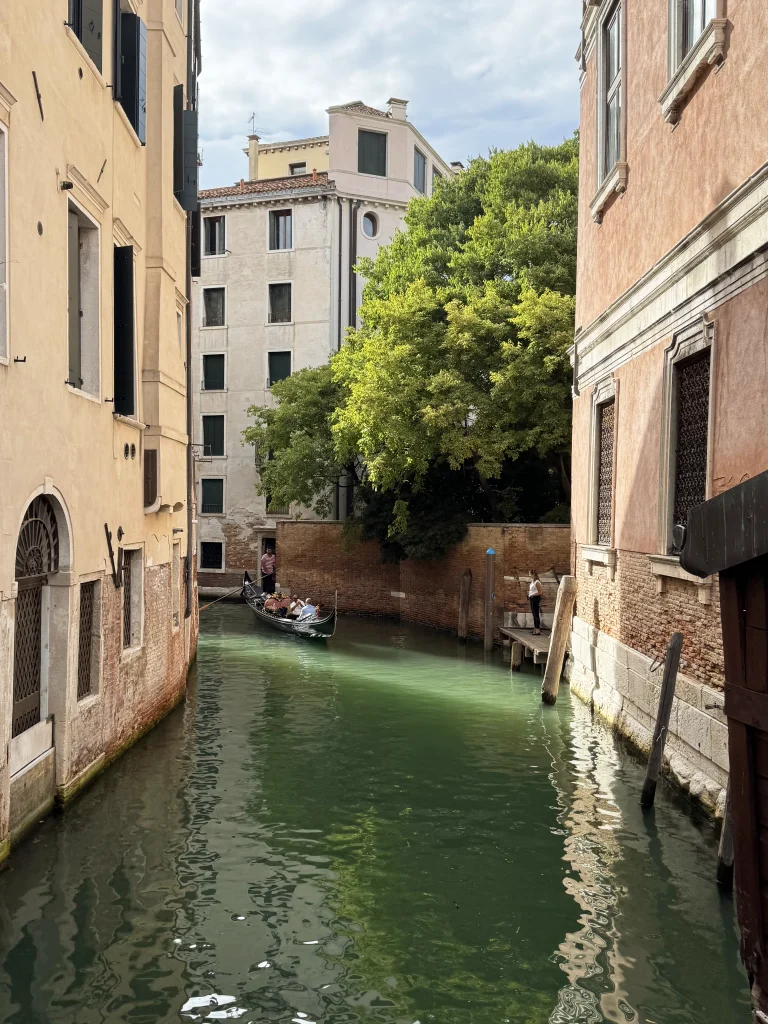
Even today, Venetian problem-solving blends ancient simplicity with modern needs. Garbage collection? Hand-pushed carts by the carradori, just like centuries ago. Online deliveries? DHL and Amazon branded boats glide along the canals—sometimes passing an ambulance-boat or a police-boat along the way. Goods distribution? Barges unload cargo onto the quays, and men push carts to individual shops—a vivid reminder of how much physical labor the Industrial Revolution removed from daily life elsewhere.
And high water? Venice fights it with MOSE, a system of mobile flood barriers, expensive and controversial but designed to protect the city from severe tidal surges.
Trade and Maritime Power of Venice
Venice’s brilliance comes from the relentless ingenuity of its people—a mind constantly at work solving the myriad challenges posed by life on a fragile lagoon, all while engaging boldly with the wider world.
Trade has always been Venetians’ true calling. While inland cities declined during the Middle Ages, Venetians explored new routes across the eastern Mediterranean and Asia.
In a few centuries, these swampy, mosquito-infested islands became one of the richest, most admired, and feared maritime powers in the world—and one of Europe’s most cosmopolitan cities.
Marco Polo and the Gateway to the East
It was during this era that a Venetian merchant, later known as Marco Polo, traveled along the Silk Road, reaching the court of Mongol emperor Kublai Khan in China. His legendary journey, recounted in Il Milione, was the first detailed introduction of Asia to European readers.
Venice, the gateway to the East, was the cradle of global trade. With wealth came military power. By the 15th century, at the peak of the Venetian Republic’s expansion from the Adriatic to the eastern Mediterranean, no coast lacked a Venetian outpost—from modern Croatia, Albania, Montenegro, Greece, Cyprus, to Rhodes.
Venice and Byzantium
In a reversal of roles, what had once been a duchy under Byzantine rule, Venice conquered Byzantium—then Constantinople, today Istanbul—following the Fourth Crusade in 1204. Relations between these two Mediterranean powerhouses were a mix of reciprocal admiration and fear.
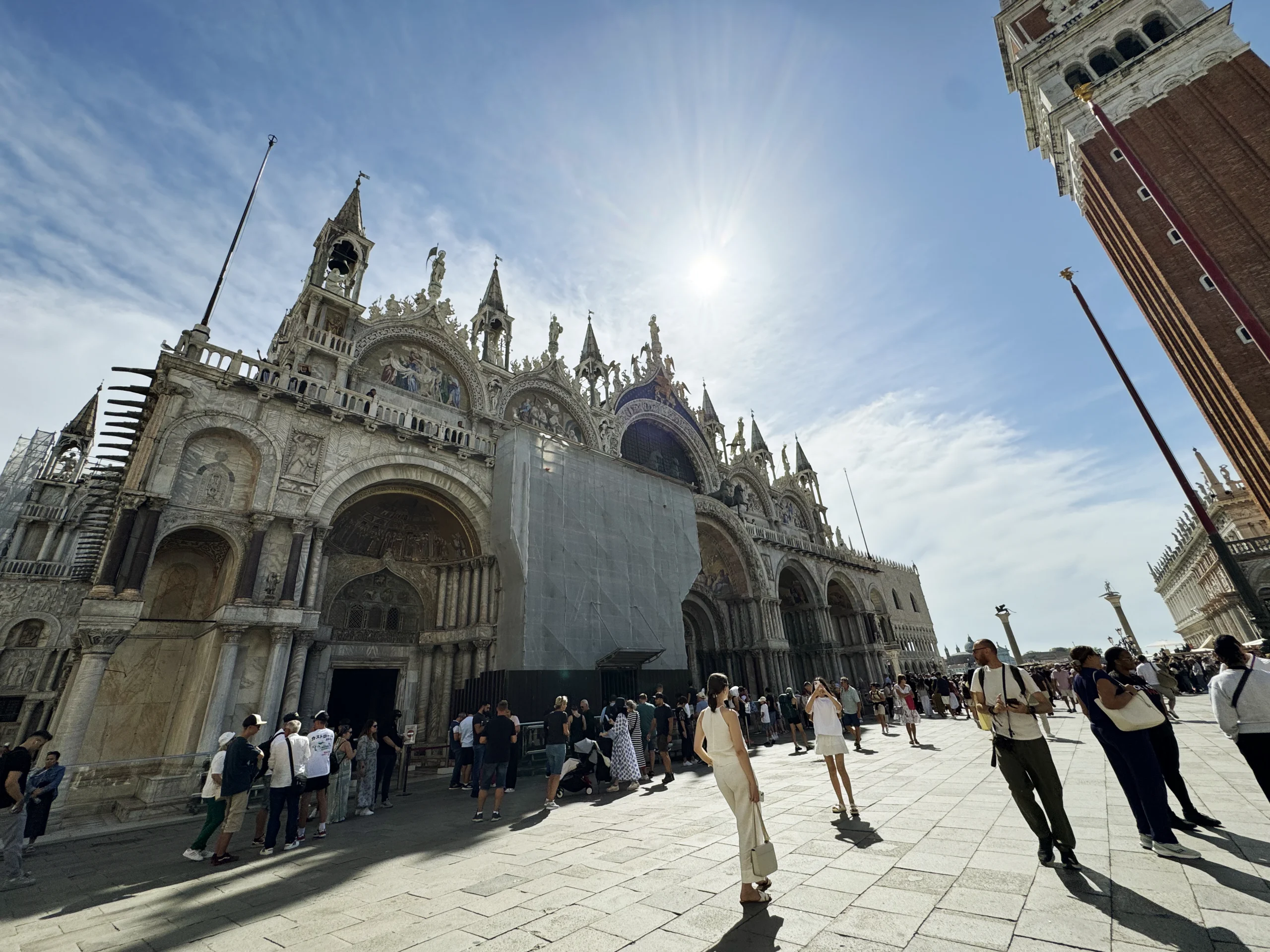
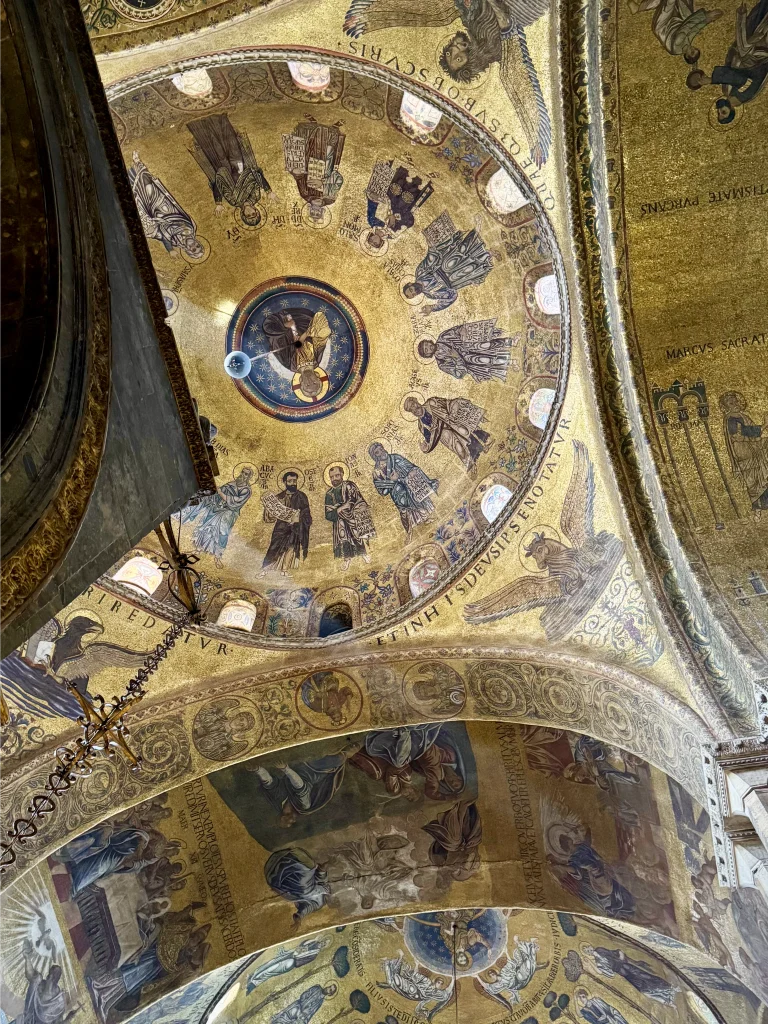
Where do you think Venetians drew inspiration for the dazzling mosaics of St. Marco, or where do you think they took the magnificent bronze horses that stand on the basilica’s loggia?
Decline and Artistic Splendor
Yet every power eventually declines. With the discovery of the Americas, Venice and the other maritime republics lost commercial dominance. However, Venetians faced decline with grandeur. Despite the adverse conditions, the 18th century marked the city’s artistic peak—the Venice of Doges, Casanova, the flamboyant masked Carnival, Goldoni, and Vivaldi.
This spirit—adventurous, witty, daring—is part of Venetian DNA. At the end of the day, according to local tradition, this was the city who sent to Egypt a couple of merchants to smuggle St. Mark’s relicsunder layers of pork to evade Muslim customs officers.
Venice’s Legacy in Language
Venice’s influence extends to language, too. Words born here—like arsenale and ballot—spread across European languages.
If you visit the Venice Contemporary Art Biennale, you will walk through the Arsenale, once the site where the Republic’s ships—civil and military—were built and arms stored. And it’s no coincidence that the word for the arsenal is the same in Italian (arsenale), English (arsenal), French (arsenal), German (Arsenal), and even Russian.
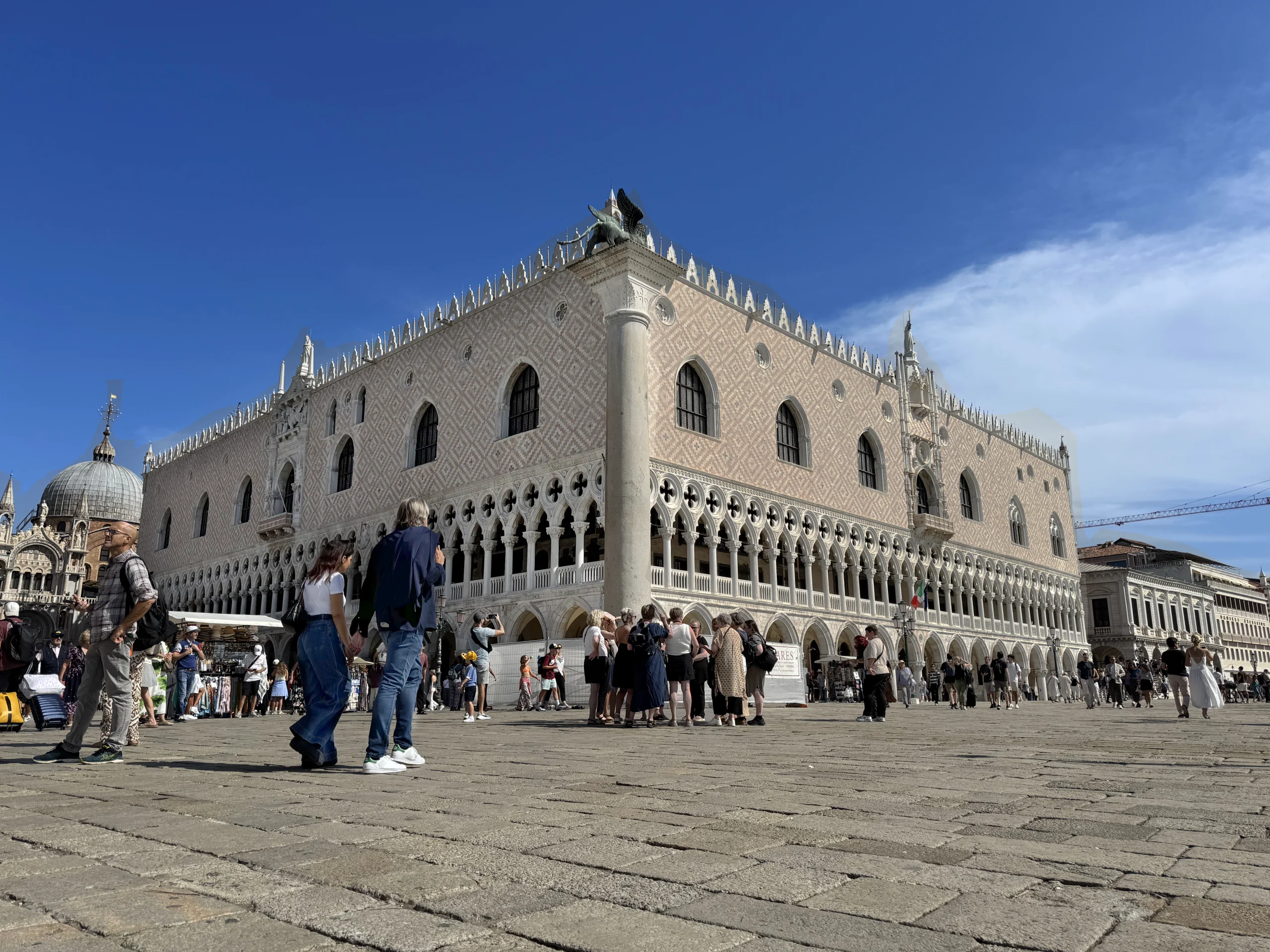
If you go to admire the frescoed ceilings of the Doge’s Palace, you will hear the story of the Republic that first adopted centuries ago the system of secret-ball voting for electing its political leader, the Doge (“the Duke”). And it is from the Venetian dialect word for the little ballot, ballota, that we derive the Italian (ballottaggio), French (ballotage), English (ballot), and Spanish (ballotaje) terms for a runoff vote.
In Cinema
In short, Venice is a cornerstone of the universal imagination, not only linguistically. It has left its mark on all artistic fields.
From the unique architecture of its palaces to world cinema, which has made it one of the most beloved storytelling locations. From Anonimo Veneziano by Enrico Maria Salerno, to Giuliano Montaldo’s biopic on Giordano Bruno, to Lasse Hallström’s Casanova starring Heath Ledger… Venice has also been the setting for Thomas Mann’s Death in Venice directed by Luchino Visconti and one of the locations for Stephen Norrington’s The League of Extraordinary Gentlemen.
Many genre films have iconic Venice sequences: Steven Spielberg’s Indiana Jones and the Last Crusade (1989) and James Bond films such as From Russia with Love, Moonraker, and Casino Royale.
Venice reciprocates this love every year in September with the Venice Film Festival on the island of Lido, held for 82 years.
In Literature
Countless literary works also celebrate the city, from Shakespeare’s Othello and The Merchant of Venice, to Thomas Mann and Henry James’ Venice.
With such a spirit and atmosphere, Venice naturally attracts artists from all over the world. Its water-bound character and colorful reflections are recurring images in Brodsky’s works. The Russian poet spent many winters in Venice and dedicated Watermark, a prose meditation on the city and its relationship with water. Brodsky’s remains lie in the local San Michele cemetery, not far from Ezra Pound, who wrote his last work A Lume Spento in Venice.
French writer Philippe Sollers spent many years in Venice and published a Dictionary for Lovers of Venice.
Graphic novel enthusiasts cannot forget Corto Maltese, the charismatic sailor created by one of Italy’s most beloved cartoonists, Hugo Pratt. His navigational and adventure stories often take Venice as their backdrop and are available in English.
Venice Today: A Living Cultural Capital
Venice is a concentration of Western culture with a hint of East. Among the façades lining the Grand Canal, the golden mosaics, and frescoed ceilings, one finds beauty, grace, curiosity about the world, and the relentless pursuit of wealth and power.
In its alleys, you can get lost among delicate laces, plates of cichetti, and an ombra of wine. To understand all the different Venetias – the fishermen’s, the Doges’, the literati’s, and the carradori’s – a lifetime is not enough.